AI saves the average knowledge worker about 11 hours a week. It also costs them 6.4 hours a week to make it usable. Do the math and the celebrated productivity revolution shrinks to a net gain of roughly 4.6 hours — before you even ask whether the work AI produced was any good.
That’s the finding from a new study that’s rippling through enterprise AI conversations this month, and it gives a name to something a lot of workers already feel but couldn’t quite articulate: botsitting.
The 11 Hours You Save, and the 6.4 You Don’t
The Work AI Index 2026, published in June by Glean’s Work AI Institute alongside researchers from Stanford, Emory, UC Berkeley, and four other universities, surveyed 6,000 full-time digital workers across the US, UK, and Australia. The topline numbers look great at first glance: 87% of workers now use AI regularly, and it’s automating more than a quarter of their digital work.
But the report’s real contribution is naming the shadow labor that eats those gains. “Botsitting” is the unglamorous work of making AI actually trustworthy: feeding it missing context, supervising its outputs, debugging its mistakes, rerunning prompts, and cleaning up “confident-but-wrong” answers. Workers spend 6.4 hours a week on it — nearly a full working day, and enough to cancel out more than half of what AI supposedly saves them.
The downstream effect shows up where it matters most: only 13% of workers say AI has significantly improved their organization’s overall performance, despite the near-universal adoption. That gap between individual time savings and organizational impact is the story enterprise leaders can no longer wave away as an adoption curve problem.
When Botsitting Turns Into “Botshitting”
The report identifies a second, more troubling pattern for when workers stop botsitting: 69% admit to shipping AI-generated work they haven’t fully verified, 41% say they’ve delivered work they couldn’t explain if questioned, and 28% have blamed AI for mistakes that were actually their own. Glean’s researchers call this “botshitting” — offloading judgment that should have stayed human.
It’s not random. Workers juggling multiple AI agents are far more likely to fall into this trap, because the tools are easy to spin up and hard to keep supervised. Debugging AI output is the single biggest driver of exhaustion, largely because the person doing the fixing often wasn’t the one who created the original prompt or task, so they have to reconstruct context from scratch before they can even start.
Context turns out to be the crux of the whole problem. More than half of workers (53%) say the information they need to do their jobs isn’t actually accessible to their AI systems — meaning the models are trained on the internet, not on the specifics of the business they’re deployed in. Glean’s research lead, Rebecca Hinds, put it plainly: “It’s definitely in many ways a vicious cycle that feeds itself.” Workers in “context-poor” environments are three times more likely to report feeling worn out by AI than those in “context-rich” ones.
What the Winners Are Doing Differently
The gap between companies that convert AI into real output and those stuck in the paradox isn’t about which tools they bought. It’s about where they spend their attention. Per the report, the companies pulling ahead “aren’t spending a greater share of their AI time using AI. They’re spending a greater share on the work around it: setting context, defining what ‘good’ looks like, building judgment, and deciding what should never have been handed to a model in the first place.”
Concretely, that means feeding AI systems with real enterprise context instead of relying on generic prompts, treating AI rollout as a chance to redesign workflows rather than bolt a chatbot onto old ones, and measuring success by output quality and engagement — not seat counts or prompt volume. Organizations doing this see workers ship 52% less “AI slop” and botshit 31% less often. Notably, the hardest skill for any of these companies to teach isn’t prompting — it’s knowing when not to use AI at all.
The Takeaway
The AI productivity story most executives are telling themselves — hours saved, work automated, headcount stretched further — is only half the ledger. The other half is the invisible, unrewarded labor of keeping AI honest, and right now it’s largely uncounted, unacknowledged, and disproportionately borne by the same workers claiming the time savings. If you’re a founder or operator rolling out AI tools this year, the question isn’t “how much time did this save?” It’s “how much of that time came back as babysitting?” Companies that answer that honestly — and invest in context and judgment rather than just more tool access — are the ones actually turning AI adoption into performance, not just activity.
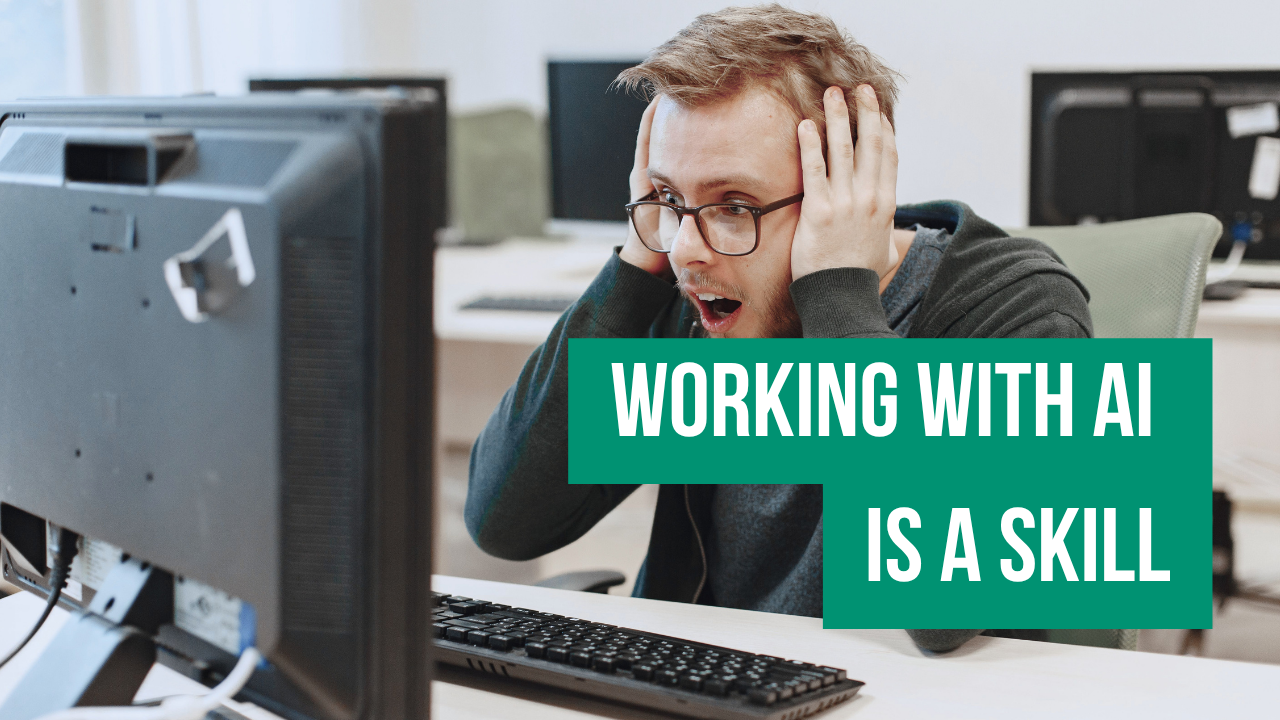
Productively working with AI is a skill. Secure your AI-native talent today with casuro.ai.
Sources
Picture credits by Gustavo Fring
- The hidden cost of enterprise AI: 6.4 hours a week babysitting bots — Computerworld
- ‘Botsitting’ is destroying productivity as workers spend nearly a full day each week making AI ‘usable’ — IT Pro
- Work AI Index 2026 — Glean Work AI Institute
- ‘Botsitting’: The AI time-savings killer only governance can stop — CIO
- 2026 Global AI Jobs Barometer — PwC