

The Amazon Pivot: AI, Efficiency, and the New White-Collar Reality
When a company as large as Amazon cuts 14,000 corporate jobs with reports suggesting the number could climb it’s easy to see it as just another cost-cutting measure. But this is different.
This isn’t a company in financial trouble. This is a profitable, growing giant making a deliberate strategic pivot. The layoffs at Amazon are a clear signal that the nature of white collar work is fundamentally changing. This move provides a glimpse into the new playbook for corporate America, one driven by two powerful forces: efficiency and artificial intelligence.
What’s Really Behind the Cuts?
On the surface, the story is about correcting a hiring spree that happened during the pandemic. But looking deeper, it’s a clear execution of CEO Andy Jassy’s new philosophy.
1. The War on “Bureaucracy”
For over a year, Jassy has been on a public mission to “remove layers” and reduce the bureaucracy that slows a giant company down. He has been vocal about his desire to operate like the “world’s largest startup.”
These layoffs are the most aggressive step in that “war.” The cuts are heavily targeting middle management and roles in departments like Human Resources (PXT), Operations, and even the profitable Amazon Web Services (AWS). These are not low-level jobs; they are the administrative and managerial layers that, in Jassy’s view, add friction to decision-making.
2. The ‘Return to Office’ Connection
The layoffs are also connected to Amazon’s strict five-day return-to-office (RTO) policy. Many analysts believe the RTO mandate was intended to encourage “voluntary attrition” getting people to quit on their own. When that didn’t happen at the scale Amazon wanted, these layoffs became the next logical step to achieve the desired headcount.
The Elephant in the Room: AI as the New Middle Manager
While Jassy has been careful to frame the cuts as a “cultural reset,” the role of AI is impossible to ignore. In a June 2025 memo, the CEO was explicit: he expects Amazon’s corporate workforce to get smaller in the coming years due to “efficiency gains from using AI extensively.”
We are seeing the first wave of that prediction.
- In Human Resources: AI tools can now handle many core functions from recruiting and onboarding to performance analysis and data processing that once required large administrative teams.
- In Operations: AI models are becoming incredibly skilled at logistics, forecasting, and supply chain management, reducing the need for human analysts.
- In AWS: Even in its tech division, Amazon is using AI to automate infrastructure management and cloud operations, tasks previously done by specialized engineers.
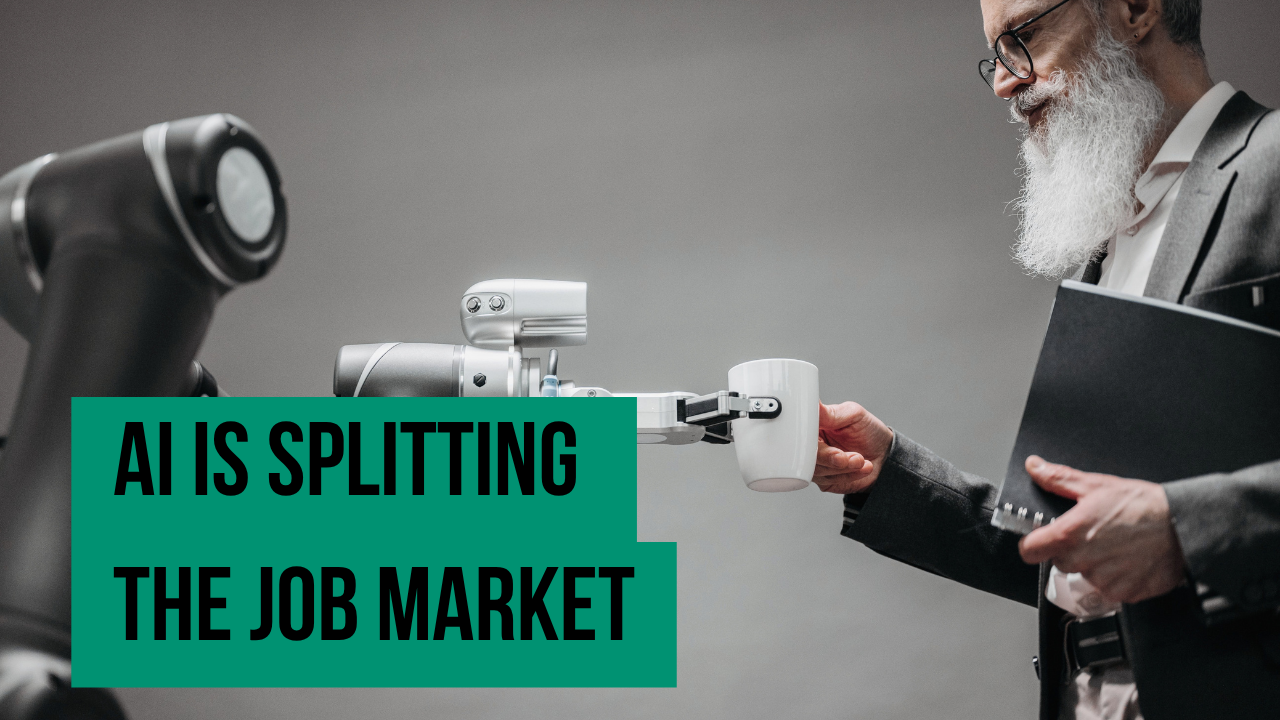
This isn’t about robots replacing warehouse workers; this is about sophisticated software replacing white collar, corporate professionals. Amazon is investing over $100 billion in AI and data centers. It is redirecting money from payroll to processing power.
The New Job Market: A ‘Hollowing Out’ of the Middle
The immediate impact is clear: tens of thousands of highly skilled, experienced professionals are now entering a job market that is itself being reshaped by AI.
This is creating a “hollowing out” of the corporate middle. The skills that built a career over the last decade-like managing processes, coordinating teams, and analyzing reports are the very skills being automated.
The new “in-demand” skills are different:
- AI Fluency: Can you use AI tools to do your job faster, better, and more creatively?
- Strategic Oversight: Can you “manage the AI”? Can you ask the right questions, interpret the results, and make strategic decisions based on the data?
- Adaptability: Can you learn and integrate new, disruptive technologies as soon as they appear?
This creates a massive new challenge. For companies, the question is no longer just “Who has the right resume?” but “Who has demonstrated they can thrive in an AI-driven workflow?” Old-school hiring methods, which rely on keywords and past job titles, are failing to find this new kind of talent.
For professionals, the pressure is on. It’s not enough to take an online course on “Generative AI.” You must find ways to actively practice and prove these new skills in a realistic environment.
“We will need fewer people doing some of the jobs that are being done today, and more people doing other types of jobs… we expect that this will reduce our total corporate workforce.”
- Andy Jassy, Amazon CEO, June 2025 Memo
What we are witnessing at Amazon is not an end, but a beginning. It’s the start of a massive realignment of the corporate workforce. The companies that win in this next era will be those that can accurately identify and assess the new skills that matter. And the professionals who thrive will be those who prove they are ready to adapt.